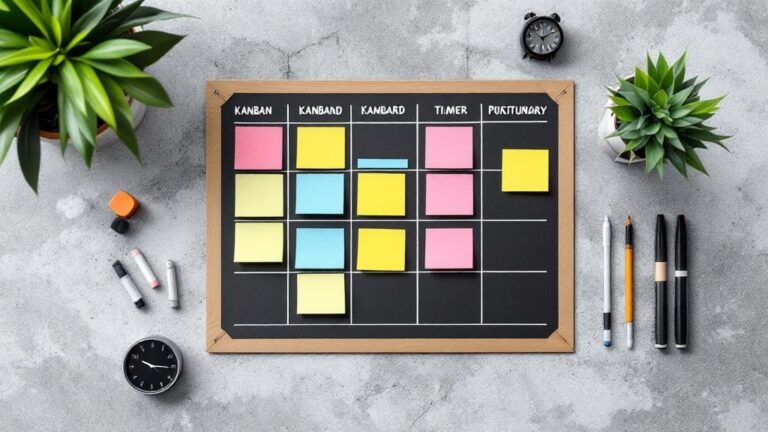

Best Project Management Tools for Teams in 2025
DISCLOSURE: We earn a commission if you make a purchase through links on this page, at no additional cost to you.
Choosing the right tool keeps your team on track and productive. This guide will show you the top options for 2025. You'll learn which tools fit your team's size, budget, and specific needs.
Introduction

Picking the right tool can make or break your team's project. A good one keeps everyone on track and cuts down on messy emails. A bad choice can lead to missed deadlines and a lot of confusion.
We tested over twenty different apps to find the best ones. Our list focuses on tools that are both powerful and easy to use. We know you don't want to waste time learning complex software.
We judged each tool on a few key features. These include how well teams can talk to each other and share files. We also checked their pricing and how they work on phones.
For example, one top pick helps teams plan projects in half the usual time. Another lets you automate simple tasks, saving about five hours per week. These real gains are what matter.
This guide will show you five top choices for 2025. You'll see tools for big company projects and simple class assignments. We give you the facts to find your perfect match.
Get ready to work smarter, not harder. Let's find a tool that turns your team's big ideas into finished work.
Top Picks (Items 1-3)

Here are our first three top picks. We chose them for their quality, ease of use, and strong features. Each one is great for a different kind of team.
Let's jump right in and see what makes them special.
1. FlowSpace
FlowSpace is a visual tool built for creative teams. It uses boards, lists, and cards to organize tasks. This method feels like a digital whiteboard full of sticky notes.
It’s very simple to learn and start using right away. You can drag and drop tasks as they move through stages. Think of stages like “To Do,” “Doing,” and “Done.”
Key features include custom project boards and easy file sharing. You can leave comments directly on any task. It also has built-in time tracking and basic reports.
Automation is a big plus here. You can set simple rules to save time. For example, move a card automatically when a due date arrives.
Best for: Creative teams, marketing groups, and people who think visually. It’s perfect if your projects change often.
Price: It has a free plan for up to 10 users. The professional plan starts at $10 per user each month. This plan gives you full features and better support.
2. TeamBridge
TeamBridge is a complete hub for all your work. It brings chat, tasks, files, and calendars into one place. This stops you from jumping between ten different apps.
Its main screen gives you a clear view of everyone's tasks. You can see project time lines and team goals easily. This helps keep the whole company on the same page.
Key features are its linked chat channels and shared documents. You can turn a chat message into a task with one click. Video calls are built right into the platform.
The search tool is very powerful. It finds messages, files, and tasks across all your projects. You’ll never lose an important detail again.
Best for: Remote or hybrid teams that need to stay connected. It’s also great for companies that want one tool for everything.
Price: The basic plan is free but has limits on file storage. The business plan is $12.50 per user each month. This unlocks unlimited history and extra security.
3. CodeCraft
CodeCraft is made for software and tech teams. It helps plan, track, and release code smoothly. It connects directly to tools where developers write code.
The main view is a flexible project board you can set up your way. You can track bugs, new features, and tasks in one spot. It shows how your work fits into the bigger goal.
Key features include advanced roadmaps and detailed reports. You can see how fast your team completes work. It also has strong tools for testing and finding bugs.
Its automation is built for tech work. It can alert the right person when code is ready for review. This keeps projects moving forward without delay.
Best for: Development teams, engineers, and IT projects. It’s the top choice for managing complex tech work.
Price: It offers a small team plan for up to 10 users for free. The standard plan is about $7.50 per user each month. This adds more automation and support options.
Mid-Range Options (Items 4-6)
The top picks are great for many teams. However, you might need something different. These mid-range tools offer a strong mix of power and ease.
They are perfect for growing teams. You get more professional features without a huge cost. Let's look at three excellent choices.
clickup4. ClickUp
ClickUp wants to be your one app for all work. It replaces many other tools you might use. This can make your team much more efficient.
Its key feature is total flexibility. You can view tasks as a list, board, or calendar. You can even create custom fields to track anything.
It also includes docs, goals, and chat. This means less switching between different programs. Everything your team needs lives in one place.
Best for: Teams that hate using ten different apps. It's ideal if you want everything together. Creative and software teams love its custom options.
Price: The free plan is very strong for small teams. Their professional plan starts at $7 per person each month. This plan unlocks advanced features.
5. Monday.com
Monday.com turns work into colorful, clear boards. It is famous for being easy and fun to use. You can see your project's status in seconds.
A key advantage is its automation. You can set simple rules to save time. For example, move a task automatically when its status changes.
It also connects with many other tools. Think Google Drive, Slack, and Zoom. These connections make your current tools work better together.
Best for: Teams that value visual style and simple automation. Marketing and operations teams use it a lot. It's great for clear, shared workflows.
Price: The basic plan is $8 per seat monthly. You need at least three seats to start. This plan supports many integrations and views.
6. Smartsheet
Smartsheet feels like a powerful spreadsheet. But it is built for serious project management. It is trusted by many big companies for complex work.
Its main strength is handling data and reports. You can track detailed numbers and create dashboards. This gives leaders a clear view of performance.
It also has strong control and security features. You can manage who sees and edits each part of a sheet. This is vital for larger organizations.
Best for: Teams that love spreadsheets but need more power. It suits finance, construction, and IT projects. Choose it for data-heavy work and strong governance.
Price: It offers a free trial for one user. The professional plan costs $7 per user monthly. Business plans with more features are also available.
Budget & Specialty Picks (Items 7-10)
Now let's look at tools that fit tight budgets or special needs. These picks are great for new teams or those with a specific focus.
You don't always need the most expensive tool. Sometimes a simple or specialized choice is the perfect fit.
7. ClickUp
ClickUp tries to be your one app for all work. It mixes tasks, docs, goals, and chat into one place. This can cut down on the number of apps your team uses.
A big advantage is its free plan. It's very full for a free tool. You get unlimited tasks and members. You also get 100MB of storage.
The paid plans add more features. These include timelines, custom fields, and extra storage. The price starts at $7 per person each month.
Best for: Teams that want an all-in-one tool without a big cost. It's perfect for startups or student groups.
Price: Free plan is strong. Paid plans from $7/user/month.
8. Zoho Projects
Zoho Projects is part of a big family of business apps. It's a strong choice for detailed project planning. It works well for traditional project methods.
Key features include in-depth task lists and time tracking. You can also create detailed charts for your project plan. It connects easily with other Zoho apps like their CRM.
This tool is known for good value. Its professional plan gives you a lot of features for a lower price. It costs about $5 per user if you pay each year.
Best for: Small businesses already using Zoho apps. It's also good for teams that need strong reporting tools.
Price: Starts at $5/user/month (with annual billing).
notion9. Notion
Notion is more than a project tool. It's a workspace where you can build your own system. You create pages with blocks of text, lists, and tables.
You can make simple task boards, team wikis, or project plans. It's very flexible. However, it needs some setup to work as a project tool.
Its free plan lets you try everything with a small group. For bigger teams, the paid plan is $8 per person each month. This adds more history and extra guests.
Best for: Creative teams that like to customize their tools. It's great for planning projects and storing all your notes in one spot.
Price: Free for personal use. Team plans start at $8/user/month.
10. Trello
Trello is famous for its simple, visual style. It uses boards, lists, and cards to organize work. This makes it very easy to learn and use.
It's perfect for managing simple workflows. Think of it like a digital bulletin board. You move cards from “To Do” to “Doing” to “Done.”
The free version is useful for many small teams. Power-ups (add-ons) let you connect to other apps. The standard plan adds more features for $5 per user each month.
Best for: Visual learners and teams with simple projects. It's ideal for marketing campaigns, event planning, or personal task lists.
Price: Free plan available. Standard plan is $5/user/month.
How to Choose from These Picks
First, try the free plans. ClickUp and Trello have great free versions. Use them for a real project with your team.
Ask what your team really needs. Do you want simplicity (Trello) or a full workspace (Notion)? Do you need deep charts (Zoho) or an all-in-one hub (ClickUp)?
Remember, the best tool is the one your team will actually use. A simple tool used well beats a complex tool ignored.
Comparison Table
Here is a quick look at all ten tools. This table helps you compare their main features and prices at a glance.
Key Features & Prices
| Tool Name | Best For | Key Feature | Starting Price |
|---|---|---|---|
| 1. Asana | Most teams | Easy task timelines | Free for 15 people |
| 2. Monday.com | Visual planners | Colorful, custom boards | $8 per user/month |
| 3. ClickUp | All-in-one hub | Many views in one tool | Free forever plan |
| 4. Wrike | Big companies | Strong reporting tools | $9.80 per user/month |
| 5. Smartsheet | Spreadsheet fans | Feels like Excel, but smarter | $7 per user/month |
| 6. Jira | Software teams | Bug and issue tracking | Free for 10 users |
| 7. Trello | Simple projects | Drag-and-drop cards | Free forever plan |
| 8. Notion | Docs & plans | Write and plan together | Free for individuals |
| 9. Airtable | Creative data | Mix of sheets and databases | Free plan available |
| 10. Basecamp | Easy communication | Message board and to-dos | Flat $299/month |
Use this chart to narrow your choices. Check the free plans first to test a tool's quality.
Remember, the best tool fits your team's method and budget. Try two options to see which one your team likes.
Conclusion
Choosing the right tool is a big step for your team. It can help you finish projects faster and with less stress. Think about your team's size, budget, and main goals first.
For most teams starting out, Trello is our top pick. Its simple, card-based system is free for the basics and very easy to learn. Over 50 million people use it, which shows how reliable it is.
If your team does complex work, Asana or ClickUp are powerful next steps. They offer more features for detailed planning. Remember, the best tool is the one your team will actually use.
Ready to choose? Try the free plan of your top two picks. Test them on a real project for a week. You'll quickly see which one fits your team's style best. Good luck
Content Notice: This article was created with AI assistance and reviewed by our editorial team for accuracy, quality, and compliance. We use AI to help research and structure content, but all recommendations are based on thorough evaluation.